Continuous Improvement at Clarity Occupational Health
At Clarity, we continually review, measure and improve our services to ensure they remain safe, effective and responsive to the needs of our clients and the employees we support.
Continuous improvement is part of our everyday culture. We use feedback, audits, clinical review and performance monitoring to identify opportunities for improvement and turn them into meaningful changes across our services.
Quality standards cover clinical work, service delivery and customer service, so improvement efforts address the whole pathway, not just one part.
How We Drive Continuous Improvement
Continuous improvement is built into the way we work. Every member of our team is encouraged to identify opportunities to improve the quality, safety and effectiveness of our services.
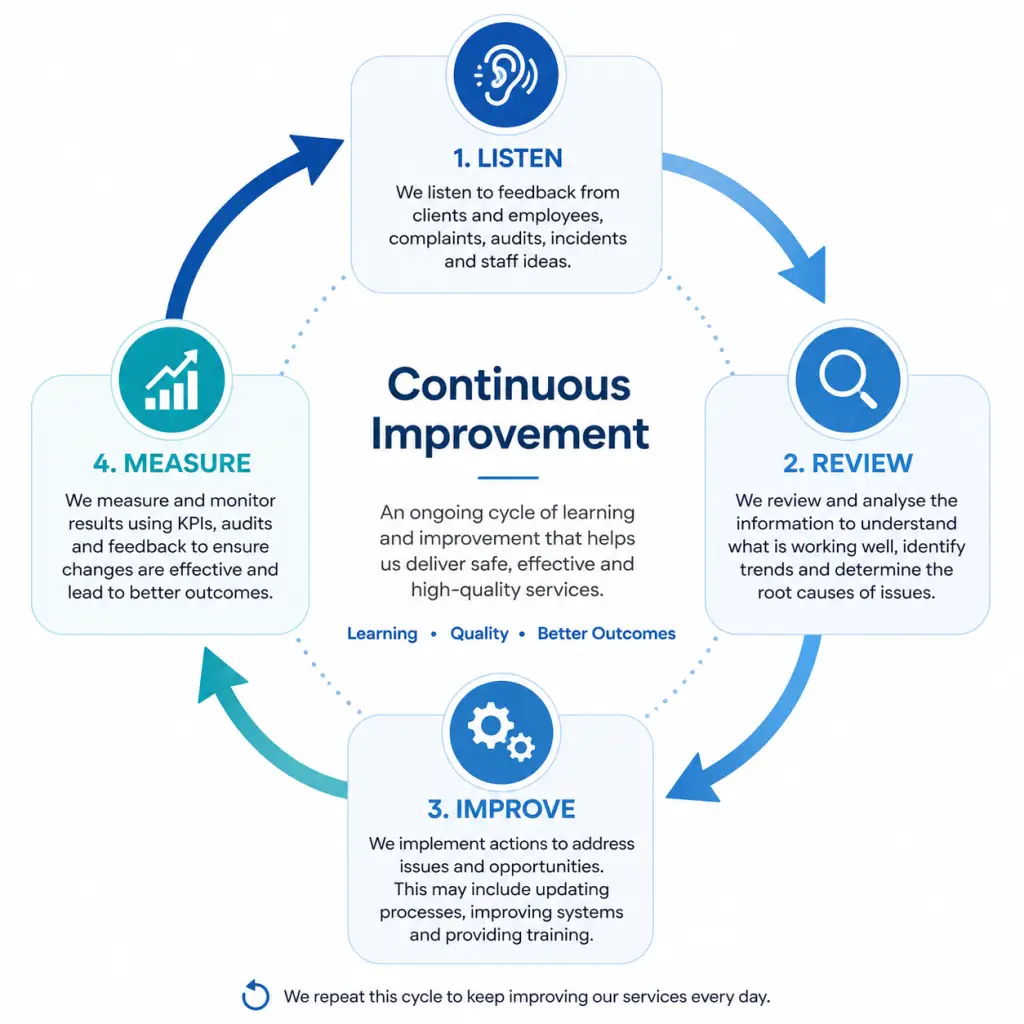
Our approach focuses on four key stages:
Listen
We actively gather information from a range of sources, including:
Client and employee feedback.
Staff suggestions and ideas.
Clinical supervision and peer review.
Audit findings and performance data.
Every piece of feedback is considered as an opportunity to learn.
Review
Information is reviewed by our clinical, operational and quality teams to understand what is working well and where improvements can be made.
This includes:
Clinical audits.
Quality performance indicators.
Incident and complaint investigations.
Root cause analysis where appropriate.
Review against recognised standards and best practice.
The aim is to understand why something happened, not simply what happened.
Improve
Where opportunities are identified, improvement actions are planned, implemented and monitored.
Examples include:
Updating clinical procedures and documentation.
Improving referral pathways and reporting processes.
Introducing additional staff training.
Enhancing digital systems and communication.
Refining client processes based on feedback.
Improvements are shared across the organisation so that learning benefits all clients and services.
Measure
Changes are monitored to ensure they deliver the intended improvements.
We evaluate success through:
Follow-up audits.
Performance reporting.
Client satisfaction.
Clinical quality reviews.
Ongoing feedback from clients and employees.
External audit feedback.
This helps ensure improvements are effective and sustainable.
Creating a Positive Learning Culture
At Clarity, continuous improvement is supported by a positive learning culture where staff are encouraged to speak up, share ideas and learn from experience.
We believe the best improvements come from open discussion, constructive feedback and collaboration across clinical and operational teams.
By focusing on learning rather than blame, we strengthen our services while maintaining the highest standards of quality and patient care.
Turning Feedback Into Action
Feedback plays an important role in shaping our services.
For example, client feedback has led to improvements in referral forms, communication throughout case management and appointment processes. Audit findings and clinical reviews are also used to refine documentation, strengthen governance arrangements and improve consistency across our services.
This cycle of listening, reviewing, improving and measuring helps ensure that every improvement is based on evidence and delivers real value for clients and employees.
What This Means for Clients
Continuous improvement means you can expect services that evolve alongside changing legislation, clinical evidence and customer needs.
It means:
Services are regularly reviewed and improved.
Feedback leads to meaningful change.
Clinical practice remains aligned with current guidance.
Staff receive ongoing training and supervision.
Quality is monitored through recognised governance processes.
Our commitment to continuous improvement helps ensure we continue to deliver safe, effective and reliable occupational health services.
😀 What have we done well?
We’re always pleased to hear from clients who’ve enjoyed our services as it helps us to focus on the things we’re doing right and continually improve
☹️ Where do we need to improve?
When things go wrong it’s important to know why. That’s why we take your complaints seriously, as it helps us improve our service for the future.
Speak to an Occupational Health Specialist
Tell us about your workforce, sites and requirements. We will call you to discuss a practical occupational health solution and the most suitable delivery options.

 Telephone
 Email
Email