
 Telephone
 Email
Email
Protect employees exposed to hazardous workplace noise with practical audiometric testing programmes delivered across the UK. We help you plan hearing surveillance around your noise risk assessment, workforce roles, sites and shift patterns.

Where employees are exposed to hazardous workplace noise, regular hearing checks can help identify early signs of hearing damage and provide useful feedback on whether noise controls and hearing-protection arrangements are working as intended.
Audiometric testing is one part of a wider noise-risk management programme. It supports your risk assessment and control measures; it does not replace the need to reduce noise exposure and control risks at source.
Health surveillance does not replace the need to control noise at source. It provides useful feedback on whether your existing controls are protecting employees as intended.
Detect possible changes early and consider appropriate follow-up.
Use trend information to help assess hearing protection and noise-control arrangements.
Give employees appropriate information, advice and follow-up where needed.
Maintain a planned hearing-surveillance programme for relevant exposed roles.
Audiometric testing may be appropriate for employees exposed to hazardous workplace noise, including people working around noisy machinery, plant, tools, equipment and processes.
Under the Control of Noise at Work Regulations 2005, employers must provide health surveillance where a noise risk assessment indicates a risk to hearing health, including where workers are likely to be regularly exposed at or above the Upper Exposure Action Values.
The Upper Exposure Action Values are:
A daily or weekly personal noise exposure of 85 dB(A).
A peak sound pressure of 137 dB(C).
Common work environments:
Manufacturing and production
Engineering and fabrication
Construction and infrastructure
Warehousing and logistics
Food processing
Utilities and heavy industry
Workshops and maintenance teams
Audiometric testing is a straightforward assessment carried out in appropriate conditions using calibrated equipment. We plan the programme around your workplace, explain the process to employees and provide clear outcomes afterwards.
An audiometric testing appointment will usually include:
Our clinicians and technicians guide employees through the process, make sure testing arrangements are suitable and consider results in the context of the individual’s role, exposure and relevant history.
Health surveillance needs to work in the real world—across busy sites, shift patterns, dispersed workforces and changing operational demands. We provide flexible delivery options so employees can attend with less unnecessary travel and disruption.
Choose the delivery model that works best for your organisation:
Planned workplace sessions that reduce employee travel and scheduling disruption.
Flexible testing for busy, remote or multi-site operations.
Accessible local options for dispersed employees.

Health surveillance should give you more than a pass/fail result. We provide clear outcomes for employees and concise, practical management reporting that helps you understand what action—if any—is needed.
Our reporting is designed to support safer deployment, effective risk management and confident decision-making. You receive the relevant occupational-health outcome and recommendations, while confidential clinical information remains protected.
What you receive
Clear employee outcomes and appropriate next-step information
Relevant fitness-for-work or fitness-for-exposure status
Practical recommendations where workplace action may be needed
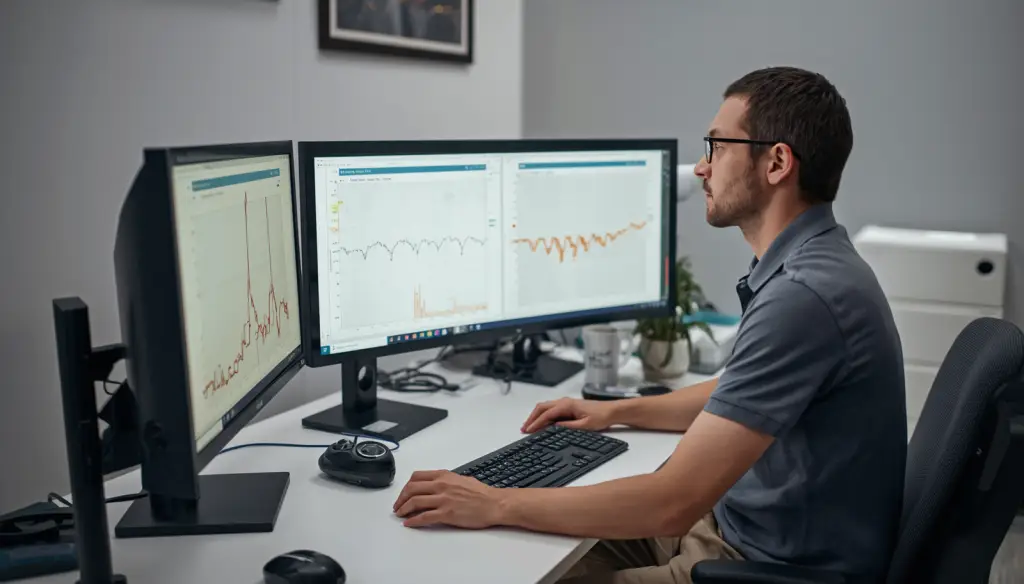
Management reporting to support trend review and programme oversight
Documentation that supports health-surveillance record-keeping and audit readiness
If your workforce has more than one workplace-health risk, audiometry can be planned alongside other relevant assessments. A coordinated programme can reduce administration, simplify scheduling and make it easier to manage surveillance across sites.
Detect possible changes early and consider appropriate follow-up.
Use trend information to help assess hearing protection and noise-control arrangements.
Give employees appropriate information, advice and follow-up where needed.
Maintain a planned hearing-surveillance programme for relevant exposed roles.
We combine clinical quality, practical delivery and clear communication to make hearing surveillance easier to manage. Our team works around workforce availability, workplace access and operational priorities, providing the information you need to take appropriate action with confidence
Noise health surveillance is a programme of regular hearing checks for employees exposed to hazardous workplace noise. Audiometric testing measures hearing thresholds and can help identify early signs of noise-induced hearing loss.
Employees may need hearing surveillance where they are regularly exposed to hazardous noise or where a noise risk assessment identifies a risk to hearing health. This commonly includes people working around noisy plant, machinery, tools, equipment or processes.
Employers must provide health surveillance when workers are regularly exposed at or above the Upper Exposure Action Values of 85 dB(A) daily or weekly exposure, or 137 dB(C) peak sound pressure. It may also be appropriate in other circumstances identified through the risk assessment.hse.gov+2
HSE guidance recommends a baseline hearing check before exposure to hazardous noise, or as soon as possible after initial exposure. This is normally followed by annual testing for the first two years, then testing at three-yearly intervals. More frequent testing may be appropriate where hearing changes are identified or the risk of hearing damage is high.
Testing usually includes a short health and exposure questionnaire, followed by a pure-tone hearing test in appropriate conditions using calibrated equipment. Results may be compared against earlier tests to identify significant changes over time.
If results indicate possible work-related hearing changes or another concern, an occupational health professional will consider the appropriate next steps. This may include further assessment, closer monitoring, referral, and review of noise controls or hearing protection arrangements.
Clarity provides audiometric testing nationwide through on-site clinics, mobile medical units and local clinic appointments. We will help you choose a delivery method that suits your locations, shift patterns and workforce availability.
Yes. Audiometric information is handled under clinical-governance and data-protection arrangements. Employees receive their own results, while managers receive appropriate fitness and workplace-action information rather than full medical records.
Tell us about your workforce, sites and requirements. We will call you to discuss a practical occupational health solution and the most suitable delivery options.